


When I started exploring the online gaming landscape in Norway, casino rich royal affiliateprogram, I soon understood that nothing is more significant than the impartial proof of fairness. RNG certification is not a marketing slogan; it is the technical backbone that transforms a simple digital game into a reliably random experience. I want to walk you through the exact mechanisms that underpin these certificates, because understanding them alters how you judge any platform. In my work, I have met many misconceptions about what a certified random number generator actually does, and I believe a calm, objective look at the facts is essential. The certification is a mathematical guarantee that no outcome can be predicted or manipulated, and it is verified through rigorous external testing. Whether you are a player looking for peace of mind or an affiliate choosing which brand to represent, this knowledge empowers you. Over the following sections, I will break down the process, the regulatory implications in Norway, and the quiet confidence that a valid RNG seal brings to the entire ecosystem.
The True Meaning of RNG Certification
Technically speaking, an RNG is an algorithm intended to produce sequences of numbers that are without any noticeable pattern. Certification means an accredited laboratory has reviewed that algorithm’s source code and its output over billions of simulated rounds. I always advise people that this is not a simple checkbox exercise; the testing environment must prove that each card dealt, each symbol that lands on a reel, and every dice roll is statistically independent of the previous one. In my experience, the difference between a certified and uncertified system is not noticeable to the naked eye, yet it is everything. The certificate itself attests that the software passes chi-square tests, serial correlation tests, and other advanced statistical analyses. These tests uncover even microscopic biases that could theoretically be exploited. When I hold a certificate from a licensed Norwegian-facing platform, I know the operator has surrendered its RNG to third-party scrutiny, meaning the house can no more predict an outcome than I can. That fundamental fairness is what certification truly means.
I often face the notion that RNG certification is merely about the game being “random enough.” In reality, the standard is absolute unpredictability. The testing laboratory will evaluate the seed generation method, ensuring that external factors like server time or player input cannot influence the number stream in a reproducible way. One of the key components I have come to value is the physical entropy source sometimes used to initiate the seed. If the algorithm relies purely on a mathematical formula without a robust random seed, it could technically be reverse-engineered. Certification therefore validates that the RNG uses a cryptographically secure model. For me, this is the bedrock of consumer protection, because it eradicates the possibility of a programmer inserting a backdoor. The certificate documents the exact software version, and any subsequent change requires a full re-evaluation. This means the certificate you see on a site like Rich Royal Casino represents a frozen, verified state of the game engine, giving me unwavering confidence in every single spin.
The Detailed RNG Certification Process
I think it is valuable to outline the certification journey because it demystifies why the process can take weeks or months. The first step is the extraction of the source code by the testing lab in a safe, monitored environment. The operator must submit the exact code that functions on live servers, and the lab builds it independently to verify there is no discrepancy. Next, the lab executes the algorithm in a simulated environment, generating terabytes of number sequences. In my conversations with compliance officers, I have found that this phase alone might encompass over ten billion test values to achieve the required confidence interval. The lab inspects the distribution, searching for deviations from expected frequencies. If a number or game result appears even 0.01% more often than statistical probability allows, the RNG will be refused until the anomaly is fixed. I appreciate this zero-tolerance approach because it eradicates ambiguity.
After the mathematical validation, the laboratory carries out a goal.com source code review to check for any concealed logic that could benefit the house outside the visible return to player configuration. I always highlight that legitimate operators seek this scrutiny because it sets apart them. The final phase is a live deployment examination where the lab confirms that the certified code is the same version running on the production servers. A digital signature or hash is created for the approved file, and any modification would immediately modify that hash. Throughout my career, I have relied on these hashes as a quick integrity check. A current certificate from Rich Royal Casino, for example, means the live environment aligns with the tested code byte for byte. Once the report is finalised and signed by a lab director, the operator gets the certificate and the right to show the lab’s seal. That seal is a tangible promise of ongoing integrity.
How RNG Certification Influences Licensing in Norway
Licensing frameworks in Norway are developing, but one constant remains: the focus on player protection through verified technical standards. While Norsk Tipping and Norsk Rikstoto hold monopolies for many forms of gambling, Norwegian players still use internationally licensed platforms, and those platforms face scrutiny under our consumer laws. I have noted that any operator targeting the Norwegian market must demonstrate that its games are fair if it hopes to preserve credibility and avoid blacklisting. RNG certification from a accredited lab is the primary way to meet that burden of proof. In my view, even if the licensing authority is the Malta Gaming Authority or the UK Gambling Commission, the RNG certificate acts as a passport that satisfies Norwegian expectations of fairness. It shows that the operator’s games undergo the same rigorous testing that would be required under a domestic licensing regime.
I pay close attention to how the Norwegian Consumer Authority assesses cross-border gambling services. While they do not issue gaming licences in the international sense, they enforce strict marketing and contractual fairness principles. An operator’s public RNG certificate can forestall many legal challenges regarding game fairness. I have observed that when a dispute about payout rates reaches a European dispute resolution body, the existence of a current RNG certificate often leads to a swift dismissal of unfounded claims. For me, this legal dimension is crucial. It means that an affiliate promoting a platform must ensure that the operator’s RNG certification is not just a decorative badge but a legally significant document. I always advise verifying the certificate’s validity date and scope on the laboratory’s public register, because an expired certificate offers no protection. In Norway’s cautious but practical legal landscape, a live RNG certificate is a shield for all parties.
The Affiliate Viewpoint: Why RNG Certification Establishes Trust
From an affiliate perspective, I see RNG certification as the single most important asset in a long-term partnership. When I promote a platform to Norwegian readers, my reputation rests on the operator’s integrity. A visible RNG certificate allows me to provide concrete evidence of fairness rather than ambiguous claims. I have found that my audience reacts favorably when I can link directly to a valid test report, indicating the exact software version and the certifying lab’s signature. This transparency reduces conversion friction because skeptical players can confirm the facts independently. In my experience, operators that commit to continuous certification tend to have reduced complaint rates and more stable affiliate earnings, because trust decreases churn. The certificate is not a marketing tool in the traditional sense; it is a risk management tool for both me and the player.
I also take into account the legal protection an RNG certificate provides affiliates under Norwegian marketing guidelines. Promoting a platform without verifiable fairness could expose me to claims of misleading advertising. Having a strong chain of evidence from an ISO-accredited laboratory demonstrates that I have carried out reasonable due diligence. I follow a personal rule to only align with programmes that publish the certification on their legal and affiliates page, exactly as I observe on structured information portals. This practice matches the calm, objective approach I want to communicate. The certificate narrates a story of voluntary accountability. When I discuss affiliate deals, I request the RNG certificate’s validity period and scope, handling it with the same seriousness as a financial licence. This due diligence protects my readers and ensures the partnerships I create are based on something more durable than short-term bonuses.
What Makes Independent Testing Laboratories Matter

I have concluded that the independence of the testing laboratory is just as important as the tests themselves. If a casino chose to self-certify its RNG, there would be an clear conflict of interest. Recognised laboratories such as eCOGRA, iTech Labs, and Gaming Laboratories International operate entirely independent from the operators. Their revenue models do not hinge on passing a client; they depend on maintaining a reputation for integrity that spans decades. In my analysis, I seek these certain names because I understand their methodologies are ISO 17025 accredited and their findings are trusted by regulators worldwide, including those influencing Norwegian policy. The laboratory’s role is to function as a neutral auditor that neither the player nor the casino can influence. They obtain the source code under strict confidentiality, execute their battery of tests, and release a report that is a pass or fail. There is no middle ground, and I consider that immensely reassuring.
When I inspect a test report, I observe that laboratories do not simply run the RNG in isolation. They integrate the algorithm into the complete game client and server architecture to verify that the randomness of the number generator transforms into fair game results. This end-to-end validation catches issues that a standalone RNG test would miss, for example a mapping error where certain random numbers incorrectly correspond to jackpot symbols. I have discovered that a robust laboratory will also analyze the game’s return to player calculations under millions of simulated betting scenarios. Their seal on a platform’s legal pages tells me that a team of mathematicians has examined the data. For anyone assessing an affiliate partnership in Norway, this due diligence is non-negotiable. Seeing a lab logo is my cue that the operator has embraced transparency, because the report’s summary is often available for download, enabling a level of scrutiny that safeguards everyone involved.
Understanding Return to Player and RNG Relationship
One of the most frequent points of confusion I face is the link between RNG certification and return to player percentages. The RNG guarantees that outcomes are random, while the RTP determines the long-term mathematical payout model. Certification confirms both, but they are separate concepts. During testing, the lab calculates the theoretical RTP by simulating the RNG-driven game millions of times and averaging the payouts. If the game’s programming asserts a 96% RTP, the lab confirms that the RNG’s output mapped through the game rules converges precisely to that figure over billions of rounds. I discover that players sometimes assume the RNG certificate guarantees short-term wins, but it does not. It ensures that the short-term results are a genuinely random sample of a longer distribution. This knowledge helps me keep a calm perspective on session outcomes, knowing variance is a natural part of a certified fair game.
I also wish to discuss how certification affects the perception of streaks. A certified RNG has no memory, and it does not alter outcomes based on previous wins or losses. The testing laboratory will explicitly inspect this “memoryless” property. In my analysis, I have witnessed rigged or uncertified systems that deliberately create near-miss patterns or extend losing streaks to stimulate further deposits. Certified systems cannot include such logic. For an affiliate, describing this distinction fosters genuine trust with an audience. When I talk about brands like Rich Royal Casino that display active certificates, I emphasise that the RNG operates exactly like a physical deck of cards that is reshuffled after every hand. The RTP is a statistical expectation, not a promise per session, and only a certified RNG can guarantee that the RTP is achieved without manipulation. This clarity is the bedrock of a healthy gambling environment.
Keeping Up About Continuous Compliance
Certification is not a once-off event. I believe it is important to understand that RNG certificates have expiry dates, usually spanning from a year to two years months. Laboratories insist on re-certification because software updates, server migrations, and game additions can alter the technical environment. In my monitoring routine, I create reminders to check the certificate registers each quarter. I advise anyone trusting these seals to do the same, because an expired certificate is practically the same to no certificate in any dispute. The best operators in Norway-facing markets understand this and make re-certification a essential operational expense. I notice that they often post updates on their legal pages well in advance of expiry, maintaining a clean timeline. This forward-thinking behaviour signals a corporate culture that emphasizes compliance over convenience, and it strongly influences my decision to keep or end an affiliate relationship.
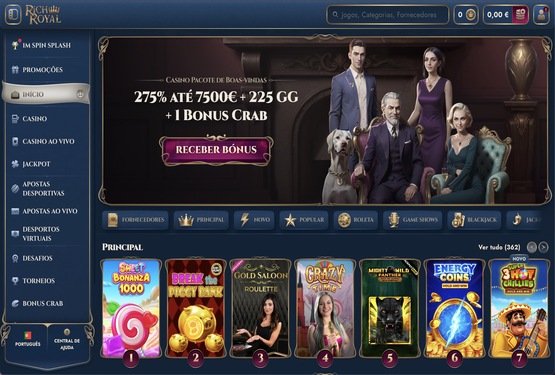
I have also learned that ongoing compliance goes beyond the RNG itself. Certification laboratories progressively offer continuous monitoring services, where the RNG’s output is checked remotely on a daily basis. This generates a dynamic compliance environment where anomalies are identified in near real-time. While not yet common, it embodies the future of the industry. I focus intently to whether a platform references such monitoring, as it proves a commitment to transparency that exceeds the minimum. In Norway, where consumers are knowledgeable and risk-averse, this extra layer can be a decisive differentiator. Remaining knowledgeable about these developments allows me to release accurate, helpful guides. Finally, my goal is to empower you with the facts so that RNG certification becomes a familiar and trusted concept, not a technical mystery. In a world of digital uncertainty, that certificate stays a reliable anchor of fairness.